
- Yunsheng’s automated assembly infrastructure lets it produce millions of musical movements per year without sacrificing mechanical precision.
- Because every movement shares the same quality management system, large orders don’t mean higher defect rates — they mean better unit economics for OEM buyers.
- The company created China’s first IP musical movement in 1992 and now offers 4,000+ melodies under one roof.
- For buyers evaluating deluxe musical movement options, production scale directly translates to shorter lead times and more competitive pricing.
- Seeing the factory in person — via a factory tour or live video walkthrough — is the most reliable way to verify manufacturing capability before committing to a supply agreement.

The Moment I Realized Scale Changes Everything in Musical Movement Sourcing
I’ll never forget the first time I walked onto our production floor in Ningbo after we installed the second automated assembly line. That was the year we crossed what I’d long considered a psychological threshold — producing more movements in a single day than most factories on earth make in a month. It wasn’t just a number. It was a complete shift in how our OEM clients approach their supply chains.
If you’re a procurement director or product manager sourcing musical movement mechanisms for a global brand, you’ve probably noticed something uncomfortable: most suppliers talk about scale, but when you dig into their actual production numbers, you’re looking at a workshop with hand assembly, inconsistent output, and a catalog that was impressive in 2005. We’ve seen those factories close. Because in this industry, scale without precision is just noise. And precision at scale — that’s the combination very few manufacturers have cracked.
This is the story of how a Chinese manufacturer went from making the country’s first IP-compliant musical movement in 1992 to producing tens of millions of units annually for brands across Europe, North America, and Southeast Asia. And more importantly, what that journey means for you as an OEM buyer evaluating whether this production scale is actually relevant to your product line.
Why Most Musical Movement Suppliers Can’t Scale Without Compromising Quality
Let me give you the engineering reality first, because I think about it every time we onboard a new OEM client. A musical movement is not a simple part. It’s a precision mechanical assembly — typically comprising a coiled spring, a tuned comb with precisely machined teeth, a governor mechanism, and a gear train that translates stored energy into controlled rotational speed. The interaction between the spring tension and the comb tooth geometry determines pitch accuracy. Get that relationship wrong, and no amount of branding saves your product from negative reviews.
When a factory tries to scale from 50,000 units per year to 5 million, the failure modes aren’t linear. You don’t just hire more workers and buy more machines. You encounter a cascade of second-order problems: spring tension drift as equipment heats up across longer runs, comb wear patterns that require re-tooling every X units, governor calibration drift on high-speed lines, and packaging compression damage that only shows up after six months on shelf. These are exactly the problems that a mature automated line with embedded SPC (Statistical Process Control) is designed to catch and correct in real time.
What I’ve watched happen with competitors — and I’ve toured a lot of factories in Beilun and beyond — is that they solve one bottleneck and create three new ones downstream. Their defect rates spike. Their lead times become unpredictable. Their OEM clients start qualifying secondary suppliers as insurance. And then the secondary suppliers start competing on price, and suddenly the whole ecosystem is chasing unit cost downward at the expense of quality.
That treadmill is exactly what Yunsheng’s manufacturing architecture was designed to break. Our automated assembly lines for the machine core are not just faster — they are measurably more consistent than manual assembly, because they remove the biggest variable in any precision manufacturing process: human inconsistency under fatigue.
Inside Yunsheng’s Production Floor: What the Factory Tour Actually Reveals
We’ve hosted buyers from Stockholm to São Paulo, and without exception, the moment that shifts the conversation is when they see the factory floor for themselves. Not the showroom. Not the conference room with the glossy samples. The actual production floor.
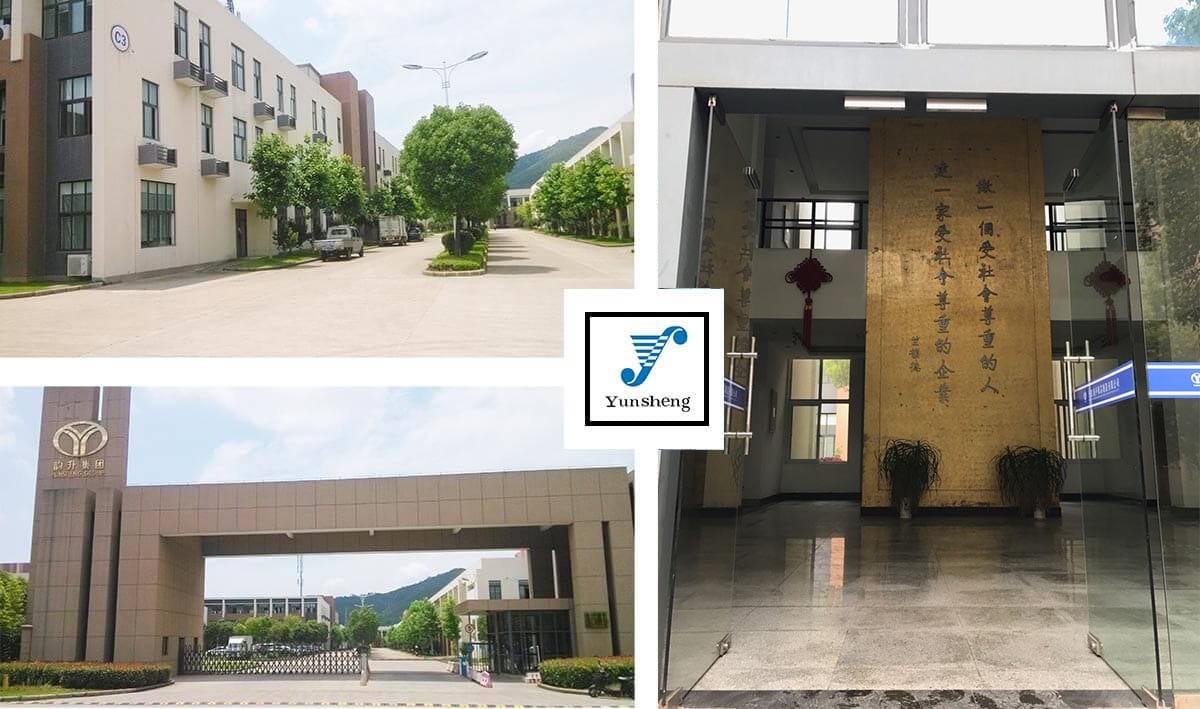
What you’ll see, if you visit or request a live video walkthrough, is a workshop organized around production flow rather than equipment type. Raw components enter one end; finished, tested movements exit the other. Between those two points, there are automated insertion stations for the spring and comb assembly, optical inspection rigs that check comb tooth geometry against a reference CAD model, torque measurement stations, and playback testing chambers where each movement is run through at least one full melody cycle before packing.
You’ll also notice something that experienced OEM buyers look for immediately: the tooling department. Yunsheng maintains in-house tooling capabilities, which means that when an OEM client needs a custom housing dimension or a non-standard spring attachment geometry, the engineering team can modify tooling internally rather than outsourcing and losing weeks to logistics. This is a significant advantage for brands developing differentiated products — especially those in the luxury gift, premium toy, or personalized consumer electronics segments.
What “25 Million Units Per Year” Actually Means for Your Supply Chain
Let me translate manufacturing capacity into commercial terms, because that’s what actually matters to your procurement team. When we say we have the infrastructure to support very high annual volumes, here’s what that implies for an OEM buyer:
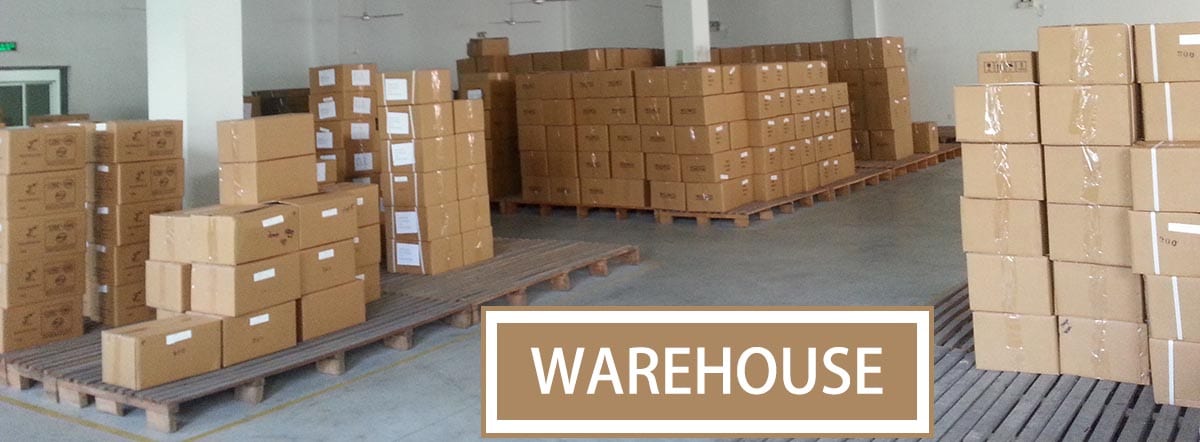
- Production scheduling flexibility. You don’t need to place a single massive order and wait 6 months. High-throughput lines mean we can split your annual volume into quarterly or monthly shipments, reducing your warehouse carrying costs and keeping your inventory fresh. This is particularly valuable for consumer product brands with seasonal demand curves.
- Consistent unit pricing across runs. Because fixed manufacturing costs are amortized across a large and consistent production base, per-unit costs remain competitive without the aggressive price negotiation that typically comes with every contract renewal. We’ve seen OEM buyers achieve significantly better total cost of ownership by locking in pricing structures across multi-year agreements rather than chasing spot market rates.
- Component leverage with Tier 1 suppliers. High-volume production gives us purchasing leverage with precision component suppliers — the same comb manufacturers, spring steel mills, and bearing suppliers that serve automotive and medical device clients. That leverage translates into material consistency that smaller factories simply cannot access.
- Fast ramp-up for new product introductions. When you’re launching a new SKU that requires a custom deluxe musical movement configuration, our engineering and tooling teams can often have samples ready within weeks rather than months. The reason is straightforward: we have the floor space, the machines, and the people to run concurrent development and production without shutting down existing orders.
The Technical Architecture Behind Yunsheng’s Musical Movements
If you’re an engineer or a quality manager reading this, you probably want to go deeper than marketing language. Fair enough. Let me walk through the key mechanical subsystems and what matters at scale for each one.
The Spring and Energy Storage System
The mainspring is where most field failures originate if manufacturing discipline is lacking. Spring steel grade, coil count, and preload tension all interact to determine how consistently the movement delivers energy to the comb throughout a single wind-to-run cycle. At Yunsheng, spring batches are verified for torque output using calibrated measurement rigs, with results logged against batch numbers. If a batch falls outside tolerance, the entire run is quarantined and re-engineered. This is basic manufacturing discipline, but you’d be surprised how many factories skip this step under production pressure.
The Comb: Pitch Accuracy Is Non-Negotiable
The comb is essentially a stiff metal strip with precisely spaced teeth, each tooth corresponding to a note. When the comb is displaced by the Tune pin mechanism, the teeth vibrate at their resonant frequency, producing sound. The critical parameter is tooth spacing — deviations as small as a few microns cause pitch errors that listeners immediately perceive as wrong. Because we use optical inspection systems on the comb assembly line, we catch dimensional deviations before they propagate into finished movements.
This matters enormously for OEM buyers whose products carry brand reputation. A music box that plays slightly out of tune — even in one note — generates negative reviews that are nearly impossible to recover from once the product is in consumers’ hands.
The Governor Mechanism: Consistency Across the Melody
The governor is the component that converts stored spring energy into controlled rotational speed, ensuring the melody plays at the correct tempo from first note to last. Inconsistent governor behavior causes what our engineers call “tempo drift” — the melody starts at the right speed but accelerates or slows as the spring unwinds. At scale, governor consistency is maintained through precise tolerances on the flywheel mass and pivot friction, controlled assembly environments that minimize particulate contamination, and running every finished movement through at least one complete melody cycle under load before release.
Why an OEM Buyer’s First IP Musical Movement Is the Hardest
We’ve worked with hundreds of brands to bring licensed musical movements to market. And without exception, the first project is always the most education-intensive for the client. Not because the technology is mysterious — but because IP compliance in the musical movement context involves several distinct layers that each require specific documentation and verification.
Yunsheng created China’s first IP musical movement in 1992. That was not an accident. The founder understood that as Chinese manufacturing became integrated with global consumer goods supply chains, the question of intellectual property compliance would move from a legal footnote to a commercial prerequisite. We built our IP management infrastructure years before most of our competitors recognized the need.
For today’s OEM buyers, this means: when you source a licensed character movement from Yunsheng, you’re working with a factory that already has established protocols for IP documentation, licensed component sourcing, and audit trail maintenance. The difference between a factory that handles IP seriously and one that doesn’t is not just paperwork — it’s whether your brand is exposed to customs seizure, recall liability, or reputational damage when a Rights Management Organization audits the supply chain.
We’ve helped brands navigate compliance requirements across multiple jurisdictions simultaneously. That institutional experience — the accumulated knowledge of what IP holders actually require from their manufacturing partners — is not something you can buy. It’s built through repeated execution over decades.
What Global Standards Actually Matter for Musical Movement OEMs
I’ve had conversations with buyers who come to us with a list of certifications that were clearly copy-pasted from a competitor’s compliance matrix. And I’ve had equally detailed conversations with buyers who genuinely understand that certain standards matter for their market and others are irrelevant box-checking. The difference in procurement outcomes between those two types of buyers is significant.
Let me cut through the noise with what actually matters in the context of musical movement wholesale sourcing:
- EN 71 is the European standard for toy safety, and it is highly relevant if your movements go into children’s products. The mechanical hazard provisions and durability requirements under EN 71-1 directly affect movement housing design and spring containment. According to the International Organization for Standardization, mechanical toy safety specifications like those in EN 71-1 are designed to address injury hazards from moving parts, sharp edges, and stored energy mechanisms — all of which are directly applicable to musical movements.
- ASTM F963 is the US consumer product safety specification for toys, and movements intended for the North American market need to meet its mechanical hazard provisions. The standard includes specific requirements for toys intended for children under 8 years old, which covers the majority of the music box gift market.
- ISO 8124 (Parts 1–3) covers mechanical and physical properties of toys from an international perspective, and is increasingly used as a reference standard in Southeast Asian and Middle Eastern markets where CE marking is not mandatory but consumer expectations are similar.
- REACH compliance matters for the European Union market if your movements contain specific surface coatings, paints on the housing, or plastic components that could release restricted substances. Yunsheng maintains substance declarations for all materials used in movements designated for EU markets.
The important point for OEM buyers is this: certification is not a binary yes/no. It’s a documented commitment to testing methodology, production consistency, and ongoing compliance. The factories that take this seriously provide test reports with production batch numbers, not just a certificate from a testing lab that was obtained years ago and never updated.
Melody Library: Why 4,000+ Options Changes Your Product Development
One of the most underappreciated aspects of sourcing from a high-volume manufacturer is what I call the catalog multiplier effect. When we tell OEM clients that we have over 4,000 melodies available across our movement catalog, the immediate question is usually “which ones are licensed?” That’s the right question to ask — and we can provide IP documentation for every licensed track.
But the more strategically important implication is this: a movement catalog of that size means your product development team can iterate rapidly on concept. You can test market response to different melody categories — classical, pop, holiday, custom composition — without committing to expensive custom tooling. You can offer regional market variants with culturally appropriate melodies, without running separate supply chains for each.
And for brands that want to stand apart, we offer custom melody composition services through our partner network. The melody is embedded into the movement during manufacturing, and the mechanism plays it back with the same precision consistency as our standard catalog tracks.

The Factory Tour Checklist Every OEM Buyer Should Run Before Signing
Based on what I’ve seen go wrong — and, occasionally, go very right — in OEM musical movement procurement, here is what I recommend checking when you evaluate a manufacturing partner. Some of these points apply to any precision manufacturing supplier; others are specific to the musical movement category.
- Assembly line observation: Watch the actual assembly process, not just the demo unit. Ask to see the line running at normal production speed. Look for operator-dependent steps versus automated steps — the ratio tells you everything about consistency risk.
- Quality testing demonstration: Ask to run through the QC protocol with a technician, not just a salesperson. What exactly does each test measure? What are the pass/fail thresholds? How are failing units dispositioned?
- Tooling department access: Verify that tooling modifications can be handled in-house. Ask specifically: “If we needed a housing dimension change, what’s your lead time?” The answer will immediately reveal whether you’re dealing with a real factory or a trading office that outsources everything.
- Sample from a production batch, not a prototype run: Always request samples pulled from regular production, not hand-assembled prototypes. The difference in quality and consistency is measurable and reveals the actual production floor capability.
- IP compliance documentation: Ask for a sample of the IP documentation package they provide to OEM clients. A factory that takes IP seriously will have structured, auditable records. A factory that doesn’t will have vague verbal assurances.
- Capacity verification: Ask for documentation of actual production volume — not just claims. Serial number ranges, shipping records, or third-party audits all serve this purpose. We provide this routinely to OEM clients conducting due diligence.
How Yunsheng Supports OEM Buyers From Prototype to Global Shelf
What I find most gratifying in my role as a sales manager is watching a client’s initial concept evolve into a product that ships in millions of units across multiple markets. That journey typically takes 3 to 6 months from first inquiry to first production shipment, depending on the degree of customization involved.
Here’s how it works when you engage Yunsheng as an OEM partner for musical movement wholesale:
- Feasibility review and technical consultation. We review your product concept, target market, certification requirements, IP considerations, and volume projections. This is where we identify potential technical challenges early — before they’ve consumed your engineering budget.
- Sample development and iteration. Our engineering team produces initial samples against your specification. You test and provide feedback. We iterate. This loop continues until the sample meets your quality and performance criteria. Because we have in-house tooling, the transition from approved sample to production tooling is handled by the same team, eliminating the translation loss that happens when sample and production are managed by different organizations.
- Production qualification run. Before committing large-scale production, we run a qualification lot — typically 1,000 to 5,000 units — that allows us to validate process capability across the full production run and give you confidence in the quality trajectory before full commitment.
- Volume production and scheduled delivery. Once qualified, your product moves to volume production on dedicated or allocated line time, with shipment schedules coordinated against your logistics requirements. We handle export documentation, quality certificates, and customs support.
- Ongoing engineering support. As your product matures in market, we can support engineering changes, cost optimization initiatives, and new market certifications without requiring you to re-qualify a new supplier from scratch.
The Question I Get From Every Serious OEM Buyer (And My Honest Answer)
“Why should we trust you with our product?”
It’s the right question. And the honest answer involves four things that I think distinguish Yunsheng from most factories in this space, whether they’re in China or elsewhere:
First: institutional depth. We’ve been making musical movements continuously since 1992. That is not a marketing claim — it’s a statement about accumulated manufacturing knowledge, supplier relationships, process documentation, and institutional memory that no startup factory can replicate quickly. The problems that trip up new entrants are problems we’ve already solved.
Second: production infrastructure that matches our claims. We show buyers the factory. Not photographs of someone else’s factory. Our actual floor. Our actual equipment. Our actual people. This is why we actively encourage buyers to visit or request live video walkthroughs — we have nothing to hide and everything to gain from transparency.
Third: IP compliance as a business practice, not a checkbox. We’ve been doing IP-compliant manufacturing since before most of our competitors existed. We understand what brand owners, licensing agents, and customs authorities need. We maintain documentation standards that satisfy rigorous third-party audits. When a Rights Management Organization audits your supply chain — and they increasingly do — working with a factory that has a documented IP compliance track record is not optional.
Fourth: the catalog and customization depth. Hundreds of movement types, thousands of melodies, in-house tooling, custom engineering. This combination means you can start with a catalog product and evolve toward full differentiation without changing suppliers. That’s a supply chain simplification that has real value for brands managing complex product portfolios.
Ready to Evaluate Yunsheng as Your Musical Movement OEM Partner?
If you’ve read this far, you’re probably serious about sourcing musical movement mechanisms at a scale that matches your brand’s ambitions. The next step is straightforward: reach out to our export team with your product requirements, target volumes, and certification needs. We’ll respond within one business day with an initial feasibility assessment.
If you want a deeper look before engaging formally, I strongly recommend requesting access to our factory tour — either in person or via live video. You’ll see exactly what I’ve described in this article: automated lines, quality infrastructure, tooling departments, and a team that has been building precision musical movements for decades. Seeing is believing, and in OEM manufacturing, verification is not a courtesy — it’s a commercial necessity.
You can reach our team directly at https://www.yunshengonline.com/contact-us/, or email us at ysexport@yunsheng.com. We’re used to working with international procurement teams, and we understand the documentation, sample, and qualification requirements that global brands need.
Post time: Aug-18-2026