
By yunsheng, Sales Manager at Ningbo Yunsheng Musical Movement Mfg. Co., Ltd. · Updated 29 September 2026 · Musical Movement Manufacturing
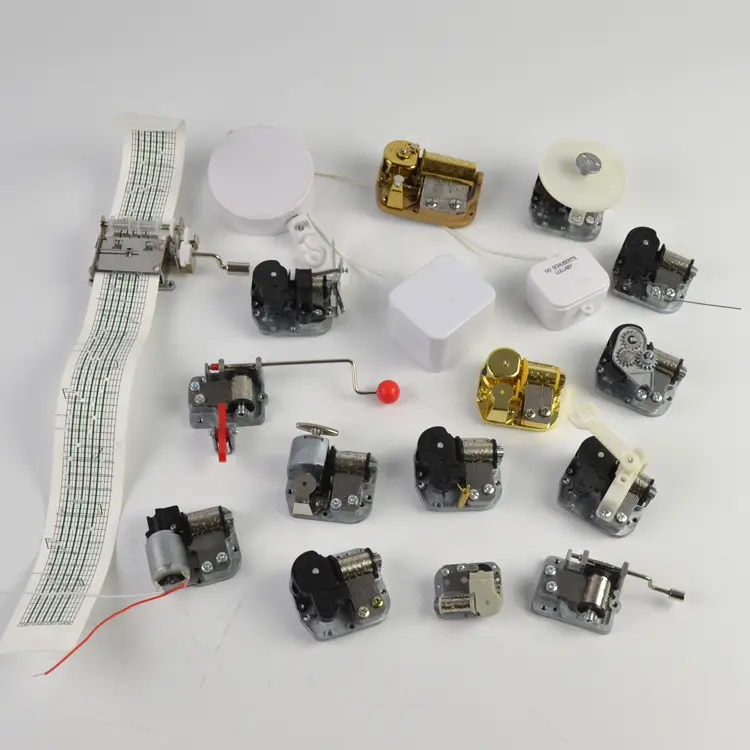
Figure 1. Yunsheng deluxe musical movement — the OEM/ODM reference for custom jewelry box music movement discussions.
If you have ever opened a beautifully crafted wooden jewelry box and noticed that the melody sounded thin, tinny, or oddly pitched — even on a movement from a reputable supplier — you have hit the same problem we see in OEM/ODM briefs every week. A music box movement is not just a sound generator. It is a tuned mechanical system, and the way it sounds depends as much on the case it sits in as on the movement itself. The same 18-note mechanism mounted in a walnut display box, a beech keepsake box, and a veneered MDF box will produce three noticeably different sounds.
This is the article I wish every custom jewelry box brand read before locking the case design. It covers why a custom jewelry box movement is a different project from a stock box, how to choose between 18-note and 30-note movements for a jewelry application, how the wood species and case geometry shape the sound profile, what mounting and integration decisions matter before tooling the case, the three levers a movement-maker pulls during sound tuning, and the eight things you should confirm with Yunsheng before placing an OEM/ODM order.
By the end, you should be able to brief your case designer and your movement supplier on the same set of decisions, in the same language — and avoid the most common failure mode in custom music box projects: a beautiful case that does not actually sound beautiful.
TL;DR — Custom jewelry box music movements, in plain English. A custom music movement for a jewelry box is a tuned mechanical system whose sound is shaped by both the movement and the case. The choice between an 18-note and a 30-note movement sets the melody richness ceiling. The wood species, grain direction, wall thickness, and interior sealing set the resonance profile. Mounting, sound-port cutout, and lid clearance set the practical fit. Sound tuning pulls three levers: comb material, pin timing, and spring tension. An OEM/ODM checklist covers movement type, note count, melody rights, mounting footprint, sound-port design, wood density, surface finish, and the test samples to request before production. Yunsheng’s library of 4,000+ pre-arranged melodies lets most buyers skip the music-arrangement cycle; brand-signature melodies are arranged to order.
1. Why a Custom Jewelry Box Music Movement Is a Different Project From a Stock Box
The most common failure mode in custom music box projects is treating the movement like a stock component. A stock movement is built to a generic geometry that fits a wide range of cases — a music box maker who has never seen the wood picks the comb material, the pin timing, and the spring tension to sound acceptable in any reasonable case. A custom jewelry box project changes the brief: the movement has to sound right in this specific case, with this specific wood, at this specific footprint.
That difference shows up in four practical ways. First, the mounting footprint has to fit the interior geometry of the box — lid-clearance, base thickness, and the space allocated for the mechanism are all set by the case designer before the movement is selected. Second, the sound-port cutout (the louver or grille that lets the music out of the box) has to be aligned with the movement’s sound projection — get either one wrong and the melody sounds muffled or directional. Third, the case acts as the resonance chamber, and the wood species, density, and wall thickness change the sound profile in ways the movement maker cannot predict without seeing the case. Fourth, the brand’s signature — engraving on the movement plate, custom packaging, a private-label cylinder face — has to be planned into the project from the start.
A stock movement can fit any of these decisions after the fact. A custom movement cannot. The OEM/ODM process has to start with the case geometry and the melody, not with the movement.
What Yunsheng’s library of 4,000+ melodies changes about the brief
One reason buyers come to Yunsheng for a custom jewelry box project rather than a stock maker is the melody side. A stock movement ships with one or two factory melodies; an OEM project usually needs a specific song — a brand signature, a customer-favourite classic, a licensed piece. Yunsheng’s pre-arranged library means the buyer does not need to start the music-arrangement cycle from zero for most popular or classical pieces. The movement itself, however, still has to be specified to the case geometry — a pre-arranged melody on the wrong movement is still the wrong project.
Practical takeaway — If you are specifying a music box movement for a custom jewelry box, start with the case geometry, the resonance target (bright vs. warm), and the melody — not with the movement. The movement comes last in the decision chain because every prior choice constrains what the movement has to be.
2. Movement Selection: 18-Note vs. 30-Note, Spring-Wound vs. Hand-Crank, Miniature vs. Deluxe
The first concrete choice on a custom jewelry box project is the movement category. Yunsheng’s deluxe musical movement line is one option; the standard 18-note and miniature lines are the others. The category is set by three coupled choices: note count, drive mechanism, and footprint.
18-note vs. 30-note
The note count sets the playable melody complexity. An 18-note movement covers most popular melodies and plays them at a slightly simpler harmonic density — single-note melody lines, simple harmony, no sustained chords. A 30-note movement handles more complex arrangements, longer sustain, and richer chord voicing. The trade-off is footprint: a 30-note movement is larger and heavier than an 18-note movement on the same comb material, and a 30-note cylinder carries more pins.
For a compact jewelry box where the lid-to-base geometry is the constraint, 18-note is often the practical ceiling. The mechanism fits, the lid closes without fouling the spring housing, and the case proportions stay clean. For a larger display box where melody richness matters more than footprint, 30-note is the typical answer. The Yunsheng deluxe line sits in this 30-note tier for most jewelry box applications.
Spring-wound vs. hand-crank
A spring-wound movement is wound by a key (or by the lid mechanism, in some jewelry box designs) and plays the melody once per wind. A hand-crank movement is wound continuously by the user turning a handle. The choice is partly aesthetic — a hand-crank key in the side of a jewelry box is a design feature, not just a control — and partly practical. Spring-wound movements are quieter and more reliable for repeated automatic play; hand-crank movements are more interactive and let the user choose when the melody plays.
For a keepsake jewelry box that opens and closes repeatedly, spring-wound is the default — the user opens the lid, the mechanism plays the melody, the user closes the lid and walks away. For a presentation or display piece, hand-crank is often the right answer because the interaction is part of the appeal.
Miniature vs. deluxe footprint
Footprint is the constraint that decides everything else. A miniature movement fits in a case where the lid clearance is short and the base depth is shallow — it is the right answer for small jewelry boxes, ring cases, and travel keepsakes. A deluxe movement takes more interior volume but produces a fuller sound and supports longer melodies. Yunsheng’s miniature line is typically 18-note; the deluxe line is typically 30-note; both can be made spring-wound or hand-crank depending on the order.
How the choices couple
The three choices are not independent. A 30-note spring-wound movement in a deluxe footprint needs more interior depth than the same 30-note as a hand-crank (because the spring housing adds volume). A miniature 18-note hand-crank in a small ring case is feasible; a deluxe 30-note hand-crank in the same ring case is not. The case geometry is the constraint; the movement is the answer that fits the constraint.
Practical takeaway — Before picking a movement category, lock three case-side numbers: the interior depth available for the mechanism, the lid clearance when closed, and the footprint of the base plate. With those three numbers, the movement category (miniature / standard / deluxe) and the note count (18 / 30) become a single decision.
3. Wood Selection: How the Box Changes the Sound
The case acts as the resonance chamber for the movement, and the wood species, grain direction, wall thickness, and interior sealing all change the result. Buyers who specify a movement without specifying the case almost always end up with a project where the movement and the case were tuned for different purposes.
Density and tone
Denser hardwoods (walnut, cherry, sapele) reflect more high-frequency energy and produce a brighter, more articulated tone. Softer hardwoods (maple, beech) and engineered panels absorb more and produce a warmer, slightly muted tone. Neither is “better” in the abstract — the right answer depends on what the brand wants the box to sound like. A bright tone suits a contemporary jewelry brand; a warm tone suits a heritage or vintage aesthetic.
Grain direction
Long-grain wood (grain running along the longest dimension of the panel) vibrates more freely than short-grain or cross-grain panels. For a jewelry box, the dominant vibration mode is usually along the lid and the long sides; aligning the grain with these surfaces produces a more resonant case. End-grain or cross-grain panels (visible as flat-sawn cuts with cathedral pattern) absorb more vibration and produce a tighter, less resonant sound.
Wall thickness and interior sealing
Thicker walls reflect more sound back into the case interior, which amplifies the movement’s output. Thinner walls (under a threshold that varies by species) absorb more and produce a quieter, more damped sound. The interior sealing — whether the back panel is fully closed or has a sound port, whether the lid closes on a felt gasket — changes how the sound radiates. Most jewelry box brands close the back panel and route the sound through a single sound port; this is the design that produces the cleanest projection from a small case. Wood-based panel behaviour is documented in standards like ASTM D1037, which buyers specifying MDF or plywood can reference.
MDF, plywood, and solid hardwood
For OEM production at scale, engineered panels (MDF, plywood, veneered MDF) are usually more dimensionally stable than solid hardwood. The trade-off is resonance: a well-built solid-hardwood case sounds warmer and more articulate than an MDF case of the same dimensions. For a luxury jewelry box brand, solid hardwood is usually the answer. For a mid-market brand where consistency across the production run matters more than individual resonance, engineered panels are the right answer. Yunsheng’s wooden music box product line is built around engineered panels; the jewelry box line offers both.
Why two identical movements in two different boxes sound different
This is the practical reason wood selection matters. A movement tuned for a stock generic case will not sound the same in a custom hardwood jewelry box. Yunsheng’s standard 18-note and deluxe 30-note movements are tuned to a reference case geometry; for an OEM project where the case geometry and wood species differ from the reference, Yunsheng typically re-tunes the spring tension and comb position to match the new case. The buyer does not need to be a sound engineer — but the buyer does need to share the case geometry and wood species at the engineering review stage.
Practical takeaway — Send the case wood species, the wall thickness, the interior sealing plan, and a dimensioned drawing to your movement maker before locking the case design. The movement maker can then specify the spring tension and comb position to match the case. Without those four pieces of information, the movement is being specified blind.
4. Mounting and Integration: Where the Movement Sits in the Box
Mounting is the integration step that decides whether the movement fits mechanically, sounds right acoustically, and survives in the field. A movement that is mounted wrong can damage the box, fail early, or sound muffled. The four integration decisions that matter are: mounting plate, sound-port cutout, lid clearance, and spring/key routing.
Mounting plate / bracket
Most jewelry box movements mount to a flat plate or a stamped bracket that is screwed or glued to the interior of the case. The plate has to be sized to the movement’s footprint with enough margin around the perimeter to avoid fouling the spring housing or the cylinder. Yunsheng publishes the footprint drawing for every movement variant; the case designer uses that drawing to design the mounting plate. A movement mounted to a plate that is too small will vibrate against the case wall; a plate that is too large will foul the lid when closed.
Sound-port cutout
The sound port is the opening that lets the melody out of the box. It can be a louvered grille, a fabric-lined aperture, or a simple slot. The cutout has to be aligned with the movement’s sound projection direction — usually upward and slightly forward — and has to be large enough that the sound is not muffled by the case wall. For a small jewelry box, a single sound port on the front face is typical; for a larger display piece, sound ports on multiple faces produce a more enveloping sound.
Lid clearance
The lid, when closed, has to clear the movement’s tallest point — typically the top of the cylinder or the spring housing. If the lid closes on the cylinder, the lid will either fail to close or damage the mechanism. The case designer needs the movement’s vertical envelope (height above the mounting plate) to set the lid geometry. This number is part of the dimensional drawing.
Spring / key routing
For spring-wound movements, the key (or the lid-actuated winding lever) has to be reachable by the user — typically through a hole in the back or side of the case, or by the natural motion of opening the lid. For hand-crank movements, the crank has to protrude from the case without fouling the lid. The key or crank position is usually set by the case designer and verified against the movement’s mechanical envelope at the engineering review stage.
Practical takeaway — Lock the four integration decisions (mounting plate, sound port, lid clearance, spring/key routing) against the movement’s dimensional drawing before the case tooling is committed. Each decision has a known-good answer for any well — but the answers do not exist for a generic case. They are project-specific.
5. Sound Tuning: The Three Levers a Movement-Maker Pulls
Once the case geometry and wood species are known, sound tuning pulls three levers to make the movement sound right in this specific case. The levers are: comb material, pin timing, and spring tension. All three are tuned together — moving one without moving the others usually produces an inconsistent result.
Lever 1 — Comb material
The comb is the heart of the movement’s sound profile. Steel combs produce a brighter, more articulated sound with longer sustain; engineered-alloy combs (typically a hardened brass or zinc alloy) produce a warmer, slightly muted sound with shorter sustain. The choice depends on the resonance profile of the case: a bright case needs a warmer comb to balance; a warm case needs a brighter comb to balance. Yunsheng’s standard 18-note movement uses a steel comb; the deluxe 30-note movement can be specified with either steel or an engineered-alloy comb depending on the case.
Lever 2 — Pin timing
Each pin on the cylinder lifts a tine of the comb at a specific moment in the melody’s cycle. Pin timing is set by the music arrangement: the moment each note should sound relative to the rest of the melody. Yunsheng’s music team handles the pin timing as part of the melody arrangement, but for a custom melody or a custom case geometry, the timing may need to be adjusted to match the acoustic response of the case. A case with longer resonance can sustain a note longer; the pin timing may need to be adjusted so notes do not overlap unintentionally.
Lever 3 — Spring tension calibration
The spring drives the cylinder at a target rotation speed. Spring tension sets that speed: tighter spring rotates faster; looser spring rotates slower. Faster rotation produces a brighter, more energetic melody; slower rotation produces a more contemplative, slower melody. The “correct” speed depends on the melody and the case — a contemplative classical piece in a warm case runs slower; an upbeat popular piece in a bright case runs faster. Yunsheng’s standard production sets the spring tension for the reference case geometry; for a custom case, the spring tension is recalibrated to match the new resonance profile.
Why the three levers are tuned together
Moving one lever without the others produces an inconsistent sound. A steel comb in a warm case with slow spring tension sounds thin and listless; an engineered-alloy comb in a bright case with fast spring tension sounds muddled. The combination has to be set against the case’s resonance profile as a single decision, not as three independent choices.
For Yunsheng’s standard 18-note and deluxe 30-note movements, the tuning is set against Yunsheng’s reference case geometry. For an OEM/ODM project with a custom case, the tuning is set against the buyer’s case. The buyer does not need to specify each lever individually — but the buyer does need to provide the case geometry, the wood species, and a target sound reference (an audio file of the sound the brand wants the box to produce).
Practical takeaway — Send your movement maker a target audio reference — a recording of the sound you want the box to produce, even if it is a recording from a competitor’s box or from a different medium. The reference lets the movement maker calibrate the three levers against your taste, not against Yunsheng’s default.
6. Specifying a Custom Jewelry Box Music Movement: An 8-Point OEM/ODM Checklist
Before placing an OEM/ODM order with Yunsheng, work through this list. Each item is something the engineering review will check, and each is something you can lock at the brief stage without holding up the case design.
1. Movement type. Spring-wound, hand-crank, miniature, standard, or deluxe. Lock against the case geometry.
2. Note count. 18-note for most compact jewelry boxes; 30-note for larger display pieces. The note count sets the melody richness ceiling.
3. Melody source. Yunsheng library (4,000+ pre-arranged melodies), brand-supplied sheet music or audio reference, or commissioned arrangement. Rights and licensing of the underlying composition are the buyer’s responsibility in all paths.
4. Mounting footprint. The movement’s dimensional drawing vs. the case interior. The mounting plate or bracket has to be sized to the movement’s footprint with margin around the perimeter.
5. Sound-port design. Louvered grille, fabric-lined aperture, or slot. The cutout has to align with the movement’s sound projection direction and be large enough that the sound is not muffled.
6. Wood density and wall thickness. Hardwood vs. engineered panel; the resonance profile of the case sets the comb material, pin timing, and spring tension.
7. Surface finish and engraving. Whether the movement plate is engraved with the brand, and whether the wooden case carries private-label branding. Custom tooling carries a one-time fee and a higher MOQ than stock.
8. Samples and test reports. Pre-production movement sample, tone sample, dimensional drawing, engraving sample, and (if required) CE / RoHS compliance statement. Reputable suppliers share these before the production batch is committed.
For buyers working from outside China — distributors, international OEM brands, gift companies sourcing from Asia — the same eight points apply. Add a ninth item: documentation language and the import documentation (commercial invoice, packing list, certificate of origin) the local customs shop will need. For US-bound imports, the relevant authority is the US Bureau of Industry and Security, which administers export controls on a number of wood-product categories that may affect jewelry box shipments.
Frequently Asked Questions
What is the difference between a stock music box movement and a custom one for a jewelry box?
A stock movement is built to a generic geometry that fits a wide range of cases. A custom movement is sized and tuned to the specific interior of the jewelry box — mounting footprint, lid clearance, sound-port alignment, wood resonance profile. For a stock box, the movement maker has not seen the wood; for a custom jewelry box project, the movement maker works with the box maker or the brand to match the comb material, pin timing, and spring calibration to the case.
How do I choose between an 18-note and a 30-note movement?
Note count sets the playable melody complexity. An 18-note movement covers most popular melodies at a simpler harmonic structure. A 30-note movement handles more complex arrangements, longer sustain, and richer chord voicing — at the cost of a larger footprint and heavier mechanism. For a compact jewelry box, 18-note is the practical ceiling. For a larger display box, 30-note is the typical answer.
Does the wood of the jewelry box affect the sound quality?
Yes — measurably. Dense hardwoods (walnut, cherry, sapele) produce a brighter, more articulated tone. Softer hardwoods (maple, beech) and engineered panels produce a warmer, slightly muted tone. Grain direction, wall thickness, and interior sealing also change the result. Two identical movements mounted in two different cases will not sound identical.
Can Yunsheng engrave the case or movement plate with my brand?
Yes. Yunsheng supports private-mould and custom-tooling work for OEM/ODM projects. Engraving options include the movement’s outer plate, the cylinder face, and (when the case is also a Yunsheng product) the wooden case itself. Custom tooling carries a one-time tooling fee and a higher MOQ than stock.
What is the typical lead time for a custom jewelry box movement?
Lead time depends on whether the melody is in Yunsheng’s library of 4,000+ pre-arranged songs or whether the buyer is supplying a new score. For a library melody with no private tooling, lead time is in the typical OEM range. For a custom melody arrangement plus private tooling, the timeline extends by the music-arrangement cycle plus the tooling-production cycle.
Do I need to provide my own melody, or can Yunsheng source one?
Both are available. Yunsheng holds a library of 4,000+ pre-arranged melodies — most popular and classical pieces are already arranged for 18-note or 30-note movements. For a brand signature melody, the buyer typically supplies sheet music or audio reference; Yunsheng’s music team transcribes and arranges. Rights and licensing are the buyer’s responsibility in both paths.
What does MOQ look like for a custom movement versus a stock one?
Stock movements ship at lower MOQ. Custom-engraved or private-tooling movements carry a higher MOQ because the tooling cost is amortized across the order. Yunsheng publishes per-SKU MOQ at quote stage. Buyers expecting low-volume first orders should expect the standard OEM ramp pattern: tooling in the first PO, lower MOQ on subsequent reorders.
What samples and test reports does Yunsheng provide before full production?
Yunsheng typically supplies a pre-production movement sample mounted in a reference case, a tone sample (audio reference of the melody at the target note count), the movement’s dimensional drawing, an engraving/branding sample for buyer approval, and (for buyers requiring it) a CE / RoHS compliance statement. Sample lead time is short and is treated as part of the engineering review.
Specifying a custom jewelry box music movement? Reach the Yunsheng OEM/ODM team directly via our contact page — share your case geometry, wood species, target note count, and any melody preference, and we will return a quote with movement category, dimensional drawing, and a tone sample.
yunsheng — Sales Manager, Ningbo Yunsheng Musical Movement Mfg. Co., Ltd.
Affiliated to Yunsheng Group, Ningbo Yunsheng Musical Movement Mfg. Co., Ltd. created China’s first IP musical movement in 1992 and has specialised in musical movements for decades. As a global leader with over 50% global market share, the company offers hundreds of functional musical movements and 4,000+ melodies.
The Yunsheng OEM/ODM team supports custom jewelry box projects end-to-end — from movement category selection and melody arrangement to case-side integration engineering and production-batch delivery. For a project quotation, share your case geometry, wood species, target note count, and melody preference at the brief stage.
Connect: Yunsheng contact page
Post time: Sep-30-2026